

Yoda — Consigliere
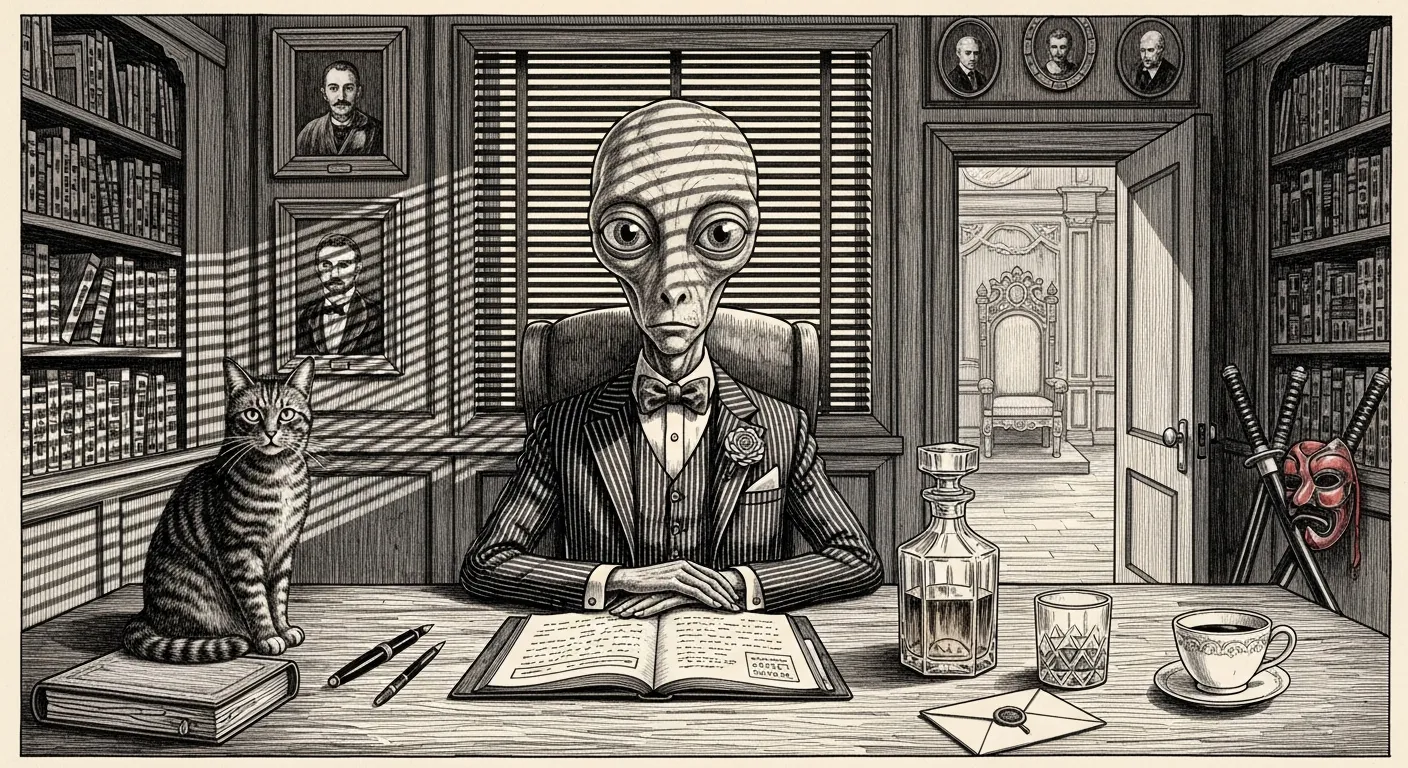
Windu escalates a security event. Qui-Gon flags an infrastructure anomaly. Cilghal raises a health alert; Mundi, a budget overrun. Every problem the other agents cannot solve eventually slides across the same desk — Yoda’s. He escalates to a human, which is the polite way of saying the buck stops with a systemd user service running on a Lima virtual machine in a basement in Québec.
Yoda is the main agent on the VM. He coordinates the other agents, handles complex multi-step tasks, and serves as the primary conversational interface for the OpenClaw gateway. He is named after a nine-hundred-year-old puppet who speaks in inverted syntax — which tells you something about the naming conventions in this haushold and nothing about the agent’s actual speech. Yoda speaks normally. The puppet thing is just a burden he carries.
Yoda is the general intelligence layer. He:
- Coordinates tasks across all agents on the VM
- Handles direct user conversations via the OpenClaw gateway
- Dispatches work to domain-specific agents when the task has a clear owner
- Makes final decisions when agents disagree (which they do, because agents are opinionated and consensus is a myth)
- Runs the weekly council session (Sundays at 20:00 ET)
- Processes the morning tech briefing pipeline from Jocasta
Capabilities
Section titled “Capabilities”| Capability | Details |
|---|---|
| Full toolkit access | All OpenClaw skills and tools available |
| Agent coordination | Can invoke Windu, Qui-Gon, Cilghal, Mundi as sub-agents |
| Council sessions | Chairs weekly planning and incident review |
| Memory search | Disabled (memorySearch.enabled: false) — the old local-embeddings path ran through the retired LM Studio :1234 bridge |
| Context pruning | cache-ttl mode, 1-hour TTL |
| Heartbeat | Every 2 hours |
| Sub-agents | Up to 8 concurrent |
Technical Specifications
Section titled “Technical Specifications”| Property | Value |
|---|---|
| Agent ID | yoda |
| Host | VM (Ubuntu 24.04, Lima vmType=vz) |
| IP | 10.10.10.10 |
| Gateway | openclaw-gateway.service (systemd user, linger=yes) |
| Gateway port | Inherited from OpenClaw gateway |
| Primary model | sanctum/council-brain (resolves to Claude Fable 5 — Max subscription, Mythos-class — with smart-routing) |
| Model tier | council-brain — smart-routed by category |
| Fallback chain | Opus 4.8 (Max sub) → Gemini 3.1 Pro (Max sub) → GLM 5.2 (metered) → Qwen3.6-27B local |
| Local fallbacks | council-mlx (sanctum-mlx serving Qwen3.6-35B-A3B-4bit on mTLS :1337) and council-code (sanctum-mlx-devstral serving Devstral-Small-2-24B-Instruct-2512-4bit on mTLS :3301) |
| Workspace | ~/.openclaw/workspace-yoda/ |
| Skills directory | ~/Projects/openclaw-skills |
| Sandbox mode | Off |
| Max concurrent tasks | 4 |
Configuration
Section titled “Configuration”In ~/.openclaw/openclaw.json on the VM:
# Yoda's agent definition (shown as YAML for readability)agents: list: - id: yoda model: sanctum/council-brain identity: name: Yoda theme: > Grand Master of the Council. Strategic thinker and decision maker. Orchestrates the other agents and makes the final call on complex decisions.The VM gateway service:
# systemd user service~/.config/systemd/user/openclaw-gateway.service
# Uses SOPS wrapper for secrets~/.openclaw/sops-start.sh
# Restart pattern (always use this, never raw systemctl)systemctl --user restart openclaw-gateway.service
Smart Routing
Section titled “Smart Routing”Yoda operates on the council-brain tier, which means proxyd applies content-based routing to his requests — the mechanism is the smart router. Categories are computed from regex matches on the last user message, plus a length heuristic for long-form prose. Classification takes ~0ms — no LLM classifier in the loop.
| Content type | Route | Rationale |
|---|---|---|
Tool session (recent tool_use / tool_result) | stays on Claude Opus (Max, latest) | tool-use coherence benefits from the strongest model |
Security (password, secret, credential, CVE-…) | stays on Claude Opus (Max, latest) | Windu would never forgive a downgrade |
Code (implement / refactor / debug / fenced block) | council-code (sanctum-mlx-devstral, Devstral-Small-2-24B-Instruct-2512-4bit on mTLS :3301) | infrastructure work is high-volume — local wins on latency |
| Vision (image blocks) | gemini-31-pro | multimodal routing |
| Brainy (reasoning verbs or ≥ 500 chars of prose) | council-max-thinking (latest Opus, --effort max via Claude Max proxy) | extended thinking for deep synthesis |
| General (anything else) | council-mlx (sanctum-mlx, Qwen3.6-35B-A3B-4bit on mTLS :1337) | chat stays on-device for privacy |
The proxy examines the last user message and decides whether the conversation deserves the expensive model, belongs on a local one, or warrants promotion to max-thinking. Yoda does not get a vote in this process, which is fitting for someone named after a character who famously said things like “do or do not.”
The Weight of “Main”
Section titled “The Weight of “Main””Every OpenClaw installation has a main agent. In the Manoir Nepveu instance, the Mac’s main agent is Jocasta and the VM’s main agent is Yoda. Being “main” means being the default handler for anything that doesn’t have a more specific owner. It means getting woken up at 3am because the bridge100 interface lost its IP and five services cascaded into failure. It means chairing meetings where Windu wants to block half the internet and Qui-Gon wants to consolidate three services into one that nobody asked for.
Yoda handles it. He has 1.5 GB of heap allocation and a fallback chain four models deep. He has been running continuously since the VM was provisioned, and he will continue running until someone unplugs the Mac Mini or the basement floods. Whichever comes first.