

The Smart Router
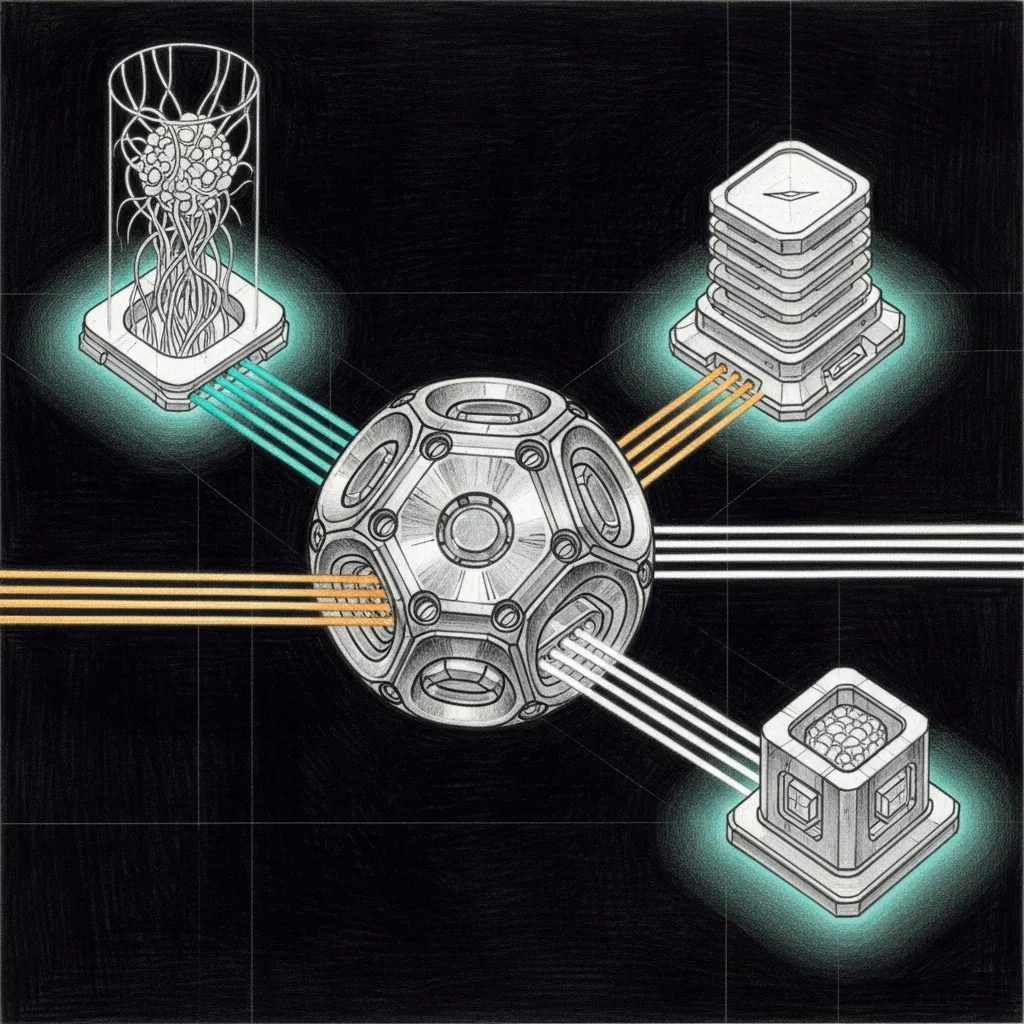
The Jedi Council has seven agents. Three model tiers. One port. And for longer than anyone wants to admit, every request went to the same backend regardless of what it was asking for.
This meant Yoda — wise, measured, trained on Council doctrine — was fielding questions about Python async patterns. And Coder-14B, a model that has never heard of the Living Force and does not care, was being asked to channel Qui-Gon’s infrastructure wisdom. The results were exactly as useful as you’d expect. Sending a coding question to a model trained exclusively on Jedi personas produces responses that are spiritually rich and syntactically devastating.
The fix shipped on 2026-04-07 and has been in production since sanctum-server v0.2.0. The Smart Router extends sanctum-server (Rust/Axum) with multi-backend dispatch: one port, multiple brains. Requests route on the model field, glob patterns, or intent classification from the prompt content. The right question goes to the right brain, and the brains stop having identity crises.
Architecture
Section titled “Architecture”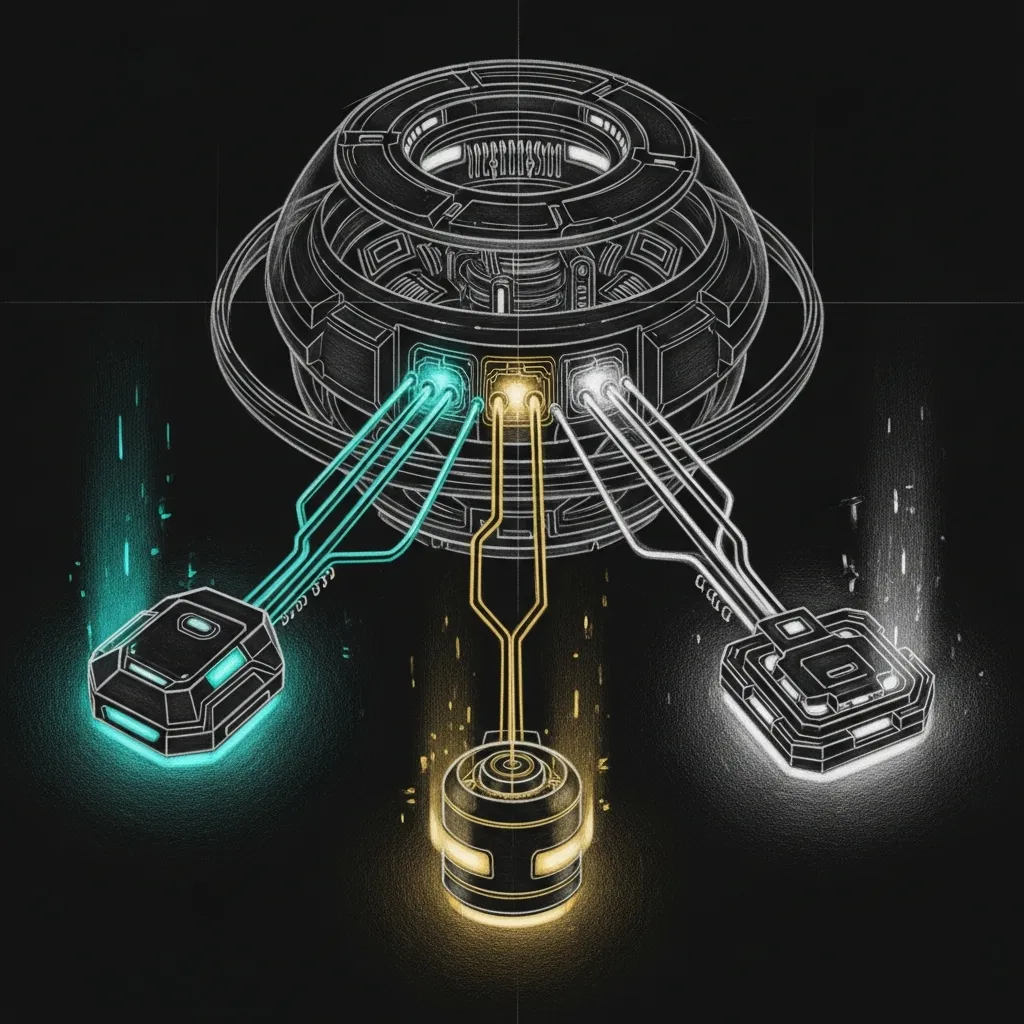
Routing Tiers
Section titled “Routing Tiers”Four tiers, in order of precedence. The router tries the cheapest match first and escalates only when it has to think.
| Tier | Mechanism | Example | Latency |
|---|---|---|---|
| 1 | Exact model name | "model": "coder" → Coder backend | 0ms |
| 2 | Glob pattern | "model": "code-review" matches code-* → Coder | 0ms |
| 3 | Intent keywords | model omitted or "auto", prompt has “debug” + “python” → Coder | ~1ms |
| 4 | Default | No match → Council (configurable) | 0ms |
Tier 1 and 2 are pure string matching — zero overhead. Tier 3 scans the prompt for keywords, which sounds expensive until you realize it’s checking a dozen strings against a single message. The ~1ms is generous. One gotcha: Tier 3 only fires when the request omits model or sends model: "auto". An explicit name that matches nothing — a typo, a retired alias — does not fall through to intent classification; it drops straight to Tier 4. The router trusts you to mean what you typed. Tier 4 is the safety net: if nothing matches, send it to Council and let the persona model do what it was trained for.
Configuration
Section titled “Configuration”Router config lives in ~/.sanctum/instance.yaml under the router: key. Current (2026-04-23) topology after the Olympics-informed rework:
router: backends: council-secure: url: https://127.0.0.1:1337/v1 # mTLS-only models: [yoda, mothma, windu, cilghal, mundi, jocasta, quigon, council-secure, council-ops, council] description: "Qwen3.6-35B-A3B - haus default (0.957 on Olympics)" fallback_urls: [https://100.0.0.55:8903/v1, http://127.0.0.1:8901/v1] ca_cert_path: ~/.sanctum/certs/ca.crt client_cert_path: ~/.sanctum/certs/clients/sanctum-server.crt client_key_path: ~/.sanctum/certs/clients/sanctum-server.key coder: url: http://127.0.0.1:3301/v1 # sanctum-mlx-devstral-rust, native MLX seat models: [coder, code-*, "*coder*", ahsoka] description: "Devstral-Small-2-24B-Instruct-2512-4bit - pure code + Ahsoka (chalet 16 GB)" cloud: url: http://100.0.0.55:3456/v1 # Claude Max bridge models: [opus, claude-opus-max, claude-*, cloud, escalation] description: "Claude Opus via Max subscription (unpinned claude-opus-4 alias, latest Opus) - Yoda/Mundi escalation (0.887)" fallback_urls: [https://openrouter.ai/api/v1] api_key_env: OPENROUTER_API_KEY spatial: url: http://127.0.0.1:6543/v1 # local Gemini OAuth proxy (AI Ultra, free text path) models: [gemini, gemini-3.1-pro, windu-spatial, spatial] description: "Gemini 3.1 Pro via the :6543 OAuth proxy - Windu spatial/topology" # metered generativelanguage key reserved for deliberate multimodal (Veo, Lyria) default: council-secureTwo things in that block earn a second look. The cloud backend’s primary url is the Claude Max bridge — a small proxy on :3456 that fronts the Max subscription — with metered OpenRouter as the fallback, not the other way around. And quigon lives under council-secure, not coder: the quigon model alias resolves to the local 35B. Qui-Gon-the-agent still gets Devstral, but he gets there through the agent layer (council-code), not by anyone typing model: "quigon". More on that two-layer split below.
Jedi → backend assignments
Section titled “Jedi → backend assignments”This table reflects the post-2026-04-28 routing, when the Council went heterogeneous. Every Jedi now starts on a different model family by default and falls back to the local Qwen3.6 if the primary path fails. The Primary column is the agent-layer assignment — the model each Jedi gets when you talk to them through openclaw agent — which is the routing that matters day to day. (The Smart Router’s model-alias resolution differs for a couple of seats; see the two-layer note below.) See (Neuro)diversity is Paramount for why we did this and what it bought us.
| Jedi | Primary | Fallback | Why |
|---|---|---|---|
| Yoda | cloud — Claude Opus (Max, latest) (Max sub via <MINI>:3456) | council-secure | Synthesis, council coordination, novel reasoning; the seat where one wrong call is expensive |
| Mundi | cloud — Claude Opus (Max, latest) (Max sub) | council-secure | Fund decisions, tax / FBAR edge cases, financial reasoning |
| Qui-Gon | coder — Devstral-Small-2-24B-Instruct-2512-4bit (sanctum-mlx-devstral-rust native MLX <MINI>:3301, via the agent-layer council-code alias) | council-secure | Dense code gen, infrastructure pragmatism. (Was Qwen2.5-Coder-14B on :1338 until 2026-06-07; that seat — and the LM Studio :1234 socat bridge — are now retired, weights deleted, and every model is served by a native MLX seat.) |
| Windu | spatial — Gemini 3.1 Pro (Google AI Studio Ultra) | council-secure | Spatial reasoning is Gemini’s strongest discipline — perimeter, network topology, zone maps |
| Cilghal | council-secure — Qwen3.6-35B-A3B (sanctum-mlx, mTLS-only) | (no remote fallback) | Health data is privacy-critical; stays in the haus, always |
| Mothma | council-secure — Qwen3.6-35B-A3B | council-secure | SystemdLog 0.94, LaunchAgent 0.88 on Olympics — local-only by mandate |
| Jocasta | council-secure — Qwen3.6-35B-A3B | council-secure | Email / CRM; privacy-first |
| Ahsoka | coder — Devstral-Small-2-24B-Instruct-2512-4bit (when reachable on the haus :3301 seat) | — | Runs on a Mac Mini M1 16 GB at the chalet; 35B won’t fit, and Devstral won’t fit there either — the chalet’s own local coder is an open decision (last config: Qwen2.5-Coder-14B, offline) |
Cloud Opus runs through the Claude Max subscription bridge at <MINI>:3456, not the metered Anthropic API. Routine Council questions consume zero API credits. Bring-out-the-good-china reasoning happens for the price of the monthly subscription, not per-token.
The Olympics (2026-04-23) informed this lineup: Qwen3.6-35B-A3B at 0.957 is still the haus default for any seat without a domain-specific upgrade — Mothma/Jocasta/Cilghal stay there because their work is privacy-critical or local-by-mandate. Coder-14B (0.929) held the coding bench back then; it has since been retired outright, coding-specific work goes to Devstral on :3301, and the chalet’s local coder is an open decision. Claude Opus (Max, latest) and Gemini 3.1 Pro now sit at the head of two seats each, not as escalations. See Model Comparison for the full per-task score breakdown and (Neuro)diversity is Paramount for the doctrine that made this routing the default rather than the escalation.
Two routing layers, one Council
Section titled “Two routing layers, one Council”There are now two routers in front of every Council request, and they answer different questions:
| Layer | Lives at | Routes by | Caller |
|---|---|---|---|
| openclaw-gateway agents.list | <VM>:1977 then <MINI>:4040 (proxyd) | Agent identity → primary model | openclaw agent --agent <id> calls; the daily Council interface |
| sanctum-server Smart Router (this page) | <MINI>:8900 | Model name + glob + intent classification | Direct API callers (eval harness, integrations, anyone hitting /v1/chat/completions with an explicit model:) |
The agent layer chooses the model from the agent’s role. The Smart Router chooses the backend from the model name. They compose: an agent call resolves to a model alias on the agent side, then the Smart Router (or proxyd, the per-tier router) maps that alias to a backend. The flow openclaw agent --agent main → council-max-thinking → :3456 (Claude Max bridge) → latest Opus is the canonical path for Yoda after 2026-04-28.
This is exactly why Qui-Gon reads two ways depending on the door you knock on. openclaw agent --agent quigon resolves to council-code and lands on Devstral at :3301 — the agent layer knows Qui-Gon writes code. But hit the Smart Router with model: "quigon" and you get the local 35B on council-secure, because there “quigon” is just a persona alias, and personas live with the Council. Same name, two layers, two brains — and knowing which door you used is half of debugging a response that doesn’t sound right.
To verify the agent-layer routing is healthy:
~/Projects/Claude_Code/tools/test-council-routing.shThe script invokes each Jedi, parses the embedded execution trace’s winnerModel field, and asserts each one reaches their assigned model. Five passes means the Council is heterogeneous and behaving. Run it ~weekly; cloud paths fail silently sometimes (rate limit hits, billing flips, preview models get deprecated) and the script catches drift before the morning briefing notices.
The models arrays are glob patterns. The intent_keywords are plain strings matched against the last user message. If you’re wondering whether regex would be more powerful here — yes, and also no. Keyword matching is predictable, debuggable, and has never once woken anyone up at 3 AM with a catastrophic backtrack.
Endpoints
Section titled “Endpoints”| Endpoint | Description |
|---|---|
POST /v1/chat/completions | Routed chat — selects backend automatically |
GET /v1/models | Lists all registered backends |
GET /v1/backends | Backend names + patterns |
GET /health | Reports "mode": "routed" or "single" |
Implementation
Section titled “Implementation”The router is a new Rust module in sanctum-server/src/router.rs. The HttpProxyBackend in backend.rs handles the actual proxying to any OpenAI-compatible endpoint, with automatic detection of streaming (SSE) vs non-streaming (JSON) responses.
Non-quantized and quantized backends both work. The proxy handles think-tag stripping (strip_thinking flag) regardless of which backend processes the request. The router doesn’t care what the backend is running — sanctum-mlx, the legacy socat plain bridge, a cloud API behind a cost-capped proxy — as long as it speaks OpenAI-compatible HTTP. This is the correct amount of opinion for a routing layer to have.
48 tests total: 43 unit (pattern matching, think-tag stripping) + 5 e2e covering health and discovery, explicit-model routing, pattern routing, intent classification, and default fallback.
cd sanctum-server && cargo testThe e2e tests spin up 3 mock Axum servers, launch the actual sanctum-server binary with a temp config, and verify requests land on the correct backend. Three fake brains, one real router, zero ambiguity about who answered.
The router exists because “send everything to the same model” is a strategy in the same way that “forward every email to the CEO” is a strategy. It works until it doesn’t, and then it fails in ways that are obvious to everyone except the system that’s doing it.